

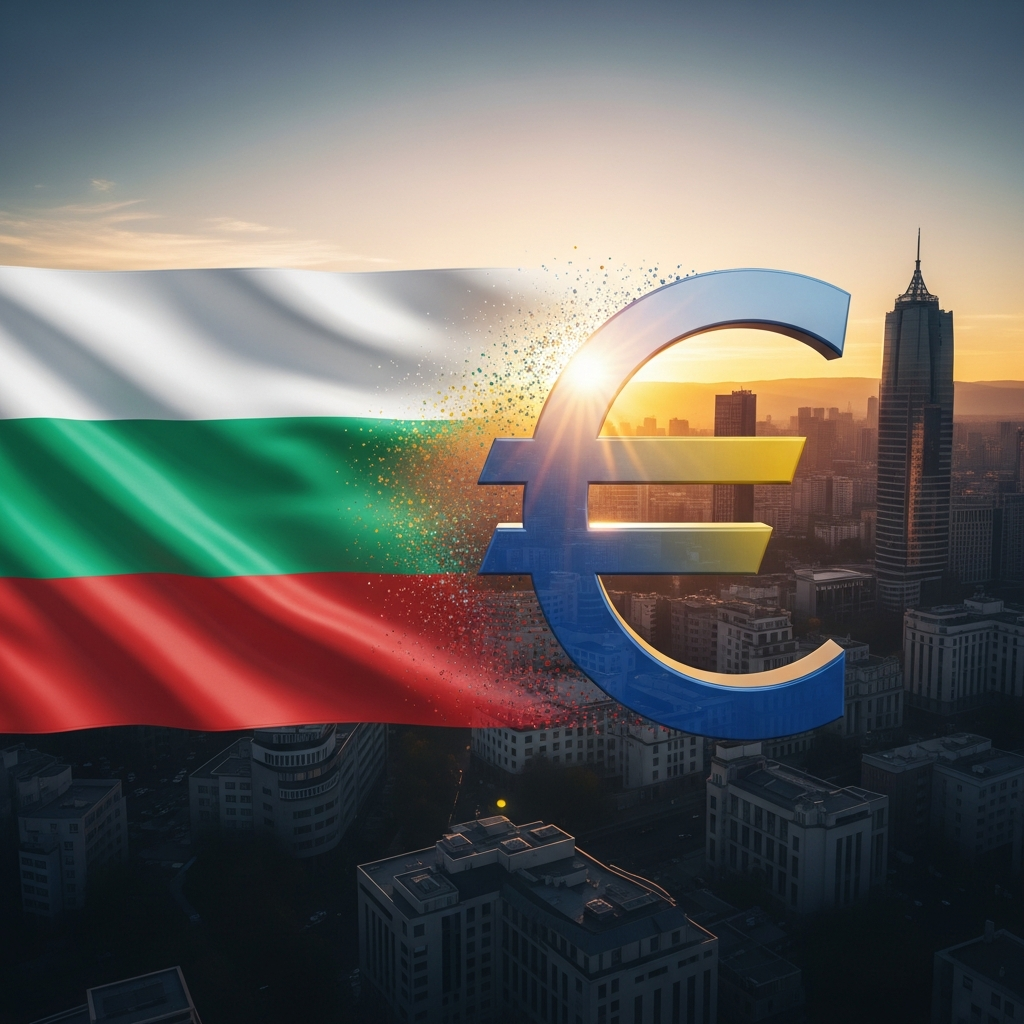
Bulgaria’s Official Entry into the Eurozone: The Timeline
The path is clear for Bulgaria’s euro adoption, with the official date set for January 1, 2026. On this day, Bulgaria will become the 21st member of the Eurozone, marking a major milestone in its economic integration with the European Union. This move comes after the country successfully met all the necessary Maastricht convergence criteria, signaling its readiness for this significant monetary transition.
Key Dates and Transition Details
For investors and businesses, understanding the transition mechanics is crucial. The conversion rate has been irrevocably fixed at 1 EUR = 1.95583 BGN (Bulgarian Lev). Following the adoption date, there will be a one-month period of dual circulation where both the lev and the euro will be accepted as legal tender. To ensure transparency and prevent unfair price hikes, businesses will be required to display prices in both currencies for 12 months following the changeover.
What Bulgaria’s Euro Adoption Means for Investors
The shift from the lev to the euro is more than just a currency change; it’s a fundamental enhancement of the investment landscape. For foreign investors, this transition unlocks several key benefits that reduce friction and increase confidence in the Bulgarian market.
Elimination of Currency Risk and Lower Costs
Perhaps the most immediate advantage for investors is the complete elimination of currency exchange risk. Operating within the Eurozone means that revenue, costs, and profits are all denominated in the same currency as many of their home markets. This simplifies financial planning and removes the volatility associated with currency fluctuations. Furthermore, it erases transaction costs related to currency conversion, making cross-border trade and investment more efficient and less expensive.
Increased Economic Stability and Credibility
Adopting the euro aligns Bulgaria with the monetary policy of the European Central Bank, a move that anchors the country in a stable and predictable economic framework. This has been confirmed by the European Central Bank confirmation of its accession. For investors, this translates to greater macroeconomic stability and boosts Bulgaria’s credibility as a secure place to do business, which is expected to attract higher levels of foreign direct investment (FDI).
Enhanced Access to European Markets
Joining the Eurozone provides Bulgarian companies and foreign investors operating in the country with seamless access to deeper, more liquid European capital markets. This integration can lead to lower borrowing costs and a wider range of financing options, fostering a more dynamic environment for growth and expansion.
Potential Challenges and Considerations
While the long-term outlook is overwhelmingly positive, the transition is not without its challenges. Public concern over potential inflation and unjustified price increases is a key issue. In response, the Bulgarian government is implementing strict price monitoring and has introduced regulations to penalize businesses that unfairly round up prices, aiming to protect both consumers and the integrity of the transition process.
Is Now the Time to Invest in Bulgaria?
Bulgaria’s euro adoption in 2026 is a game-changer. It signals a new era of economic stability, transparency, and integration with the EU’s core. For investors, this move mitigates risks while opening up new opportunities in a market that is becoming more attractive and accessible. By simplifying transactions and fostering a more stable economic environment, as detailed in ING’s analysis on the transition, Bulgaria is positioning itself as a compelling destination for foreign capital.